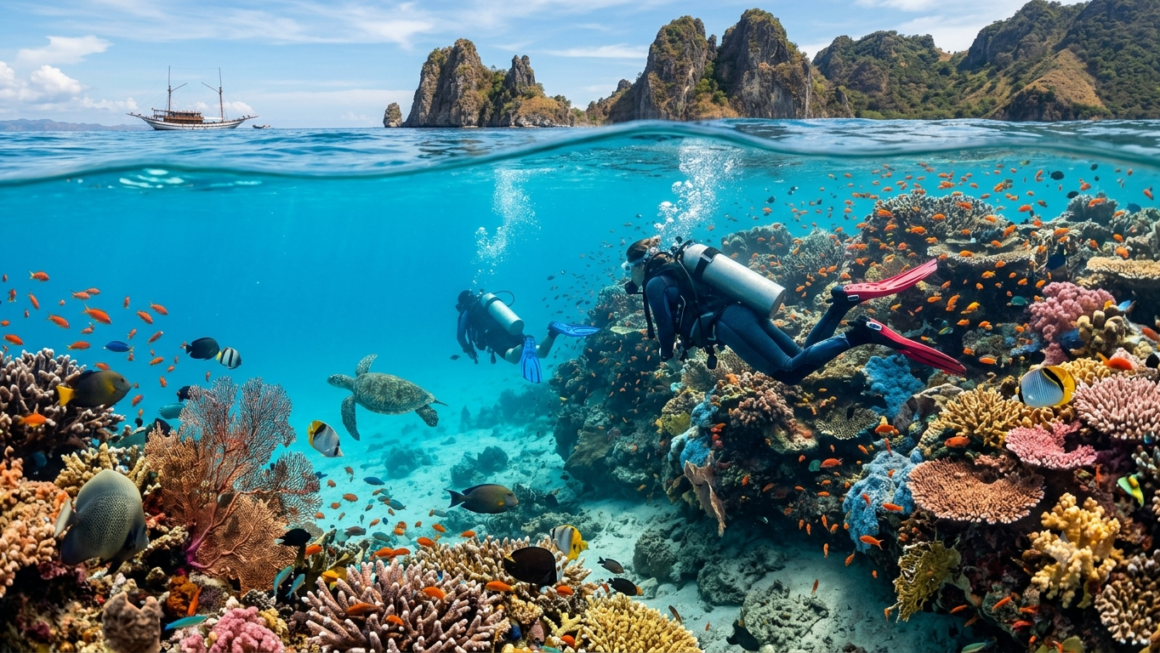
Diving in Komodo often comes with one word attached to it: currents. For some divers, that sounds intimidating. But for experienced dive guides and marine-life lovers, Komodo’s currents are exactly what make the destination so extraordinary. They move nutrients through the park, attract large marine species, support healthy coral systems, and create the kind of underwater energy that makes every dive feel alive. The key is not to fear the current, but to understand how timing, site selection, and professional guidance turn it into one of Komodo’s greatest strengths.
Why Are Komodo’s Currents So Strong?
Komodo National Park sits between the Indian Ocean and the Pacific Ocean, where water movement is naturally powerful. As tides shift, water flows through narrow channels between islands, creating currents that can change throughout the day. These movements are especially noticeable around dive sites with channels, pinnacles, slopes, and exposed reef corners.
This is why Komodo is not a destination where divers should simply jump in anywhere at any time. The best dive operators monitor tides, currents, weather, visibility, and diver experience before choosing each site. A dive that feels challenging at the wrong time can become smooth and rewarding when timed properly.
That is the first important lesson: strong currents do not automatically mean dangerous diving. They mean the destination needs good planning.
How Do Currents Bring More Marine Life?
The same water movement that creates Komodo’s reputation also creates its abundance. Currents carry plankton and nutrients across the reefs. These nutrients feed smaller fish, which then attract larger predators and pelagic species. This is why divers in Komodo often encounter reef sharks, trevallies, tuna, manta rays, turtles, schooling fish, and vibrant reef scenes.
Without current, the reefs would not feel as dynamic. The movement of water keeps the ecosystem active. Coral gardens thrive, fish gather in large numbers, and bigger animals often appear where the food chain is strongest.
This is one of the main reasons Diving Komodo feels different from easier, calmer destinations. The underwater world is not static. It is moving, feeding, hunting, drifting, and changing with the tide.
Does Strong Current Mean Komodo Is Only for Advanced Divers?
Not necessarily. Komodo has dive sites for different levels, but it is true that some sites are better suited to experienced divers. The destination is not about forcing every diver into difficult conditions. It is about choosing the right site at the right time.
Beginner or less confident divers can still enjoy protected bays, gentle reefs, and easier drift dives when conditions are suitable. More experienced divers may be guided toward current-facing pinnacles, channels, and advanced drift sites where marine action is stronger.
A good dive cruise or operator will not treat Komodo as one fixed experience. They will adjust the plan based on the group’s certification, comfort level, current strength, and daily sea conditions. That flexibility is what makes Komodo both exciting and manageable.
Why Timing Is Everything in Komodo Diving
Timing is one of the most important factors in Komodo. Tide changes can transform a site quickly. A reef that is too strong at one hour may be perfect later in the day. This is why local knowledge matters so much.
Experienced guides understand when to enter, where to descend, how to read surface movement, and when to avoid a site completely. They also know when marine life is most likely to appear. Manta rays, for example, are often linked to feeding conditions and water movement. Schooling fish may gather around reef corners where current brings food.
For divers, this means patience pays off. The best dive plan is not always the plan written days in advance. Sometimes the smartest itinerary is the one adjusted each morning according to real conditions.
How Can Divers Stay Safe in Komodo Currents?
Safety in Komodo starts before entering the water. Dive briefings should be clear and practical. Divers should understand the entry point, expected current direction, depth profile, hand signals, reef position, safety stop procedure, and what to do if separated from the group.
A surface marker buoy is also important, especially on drift dives. Divers should stay close to their guide, avoid fighting the current, maintain good buoyancy, and remain aware of their air consumption. Strong current becomes more manageable when divers move with it rather than against it.
This is why Komodo liveaboard diving can be a strong option for serious divers. A liveaboard allows guides to plan around tide windows, reach different areas of the park, and adapt each day’s schedule to the safest and most rewarding conditions.
What Makes Current-Based Diving More Rewarding?
There is a special feeling to diving in a place shaped by movement. On calmer reefs, divers may enjoy beauty and detail. In Komodo, divers often feel the full force of a living marine system. Fish gather in thick schools, soft corals open in the current, reef sharks patrol the edges, and manta rays can glide effortlessly through the blue.
For many divers, this is the reason they return. The current adds drama, but also life. It turns the dive into an experience that feels wild, natural, and deeply connected to the ocean’s rhythm.
Diving Komodo is not better because it is harder. It is better because the conditions create richer encounters when handled correctly.
How Should Divers Choose the Right Komodo Trip?
Divers should choose a trip based on experience level, preferred dive style, and the operator’s approach to safety. Look for guides who explain conditions clearly, adjust routes when needed, and do not push divers into sites beyond their comfort zone.
It is also worth asking about group size, safety equipment, dive briefings, emergency procedures, and whether the itinerary can adapt to tide and weather. In Komodo, flexibility is not a bonus. It is part of responsible dive planning.
Divers who want big marine life, drift dives, reef action, and changing conditions may enjoy longer itineraries that cover different parts of the park. Those who prefer gentler dives should communicate their comfort level early so the guide can select suitable sites.
Why Strong Currents Are Komodo’s Advantage
Komodo’s currents are not a flaw in the destination. They are the reason the diving is so alive. They feed the reefs, attract marine life, shape the dive sites, and create unforgettable underwater moments. The challenge is not to remove the current from the experience, but to approach it with respect.
With the right timing, local guidance, and safety awareness, Diving Komodo becomes less about difficulty and more about reward. The current is what turns Komodo from a beautiful dive destination into one of Indonesia’s most exciting underwater ecosystems.
For divers who want calm, predictable reefs, Komodo may feel intense at first. But for those who want movement, marine life, and a deeper sense of the ocean’s power, the currents are exactly what make the journey worth it.